
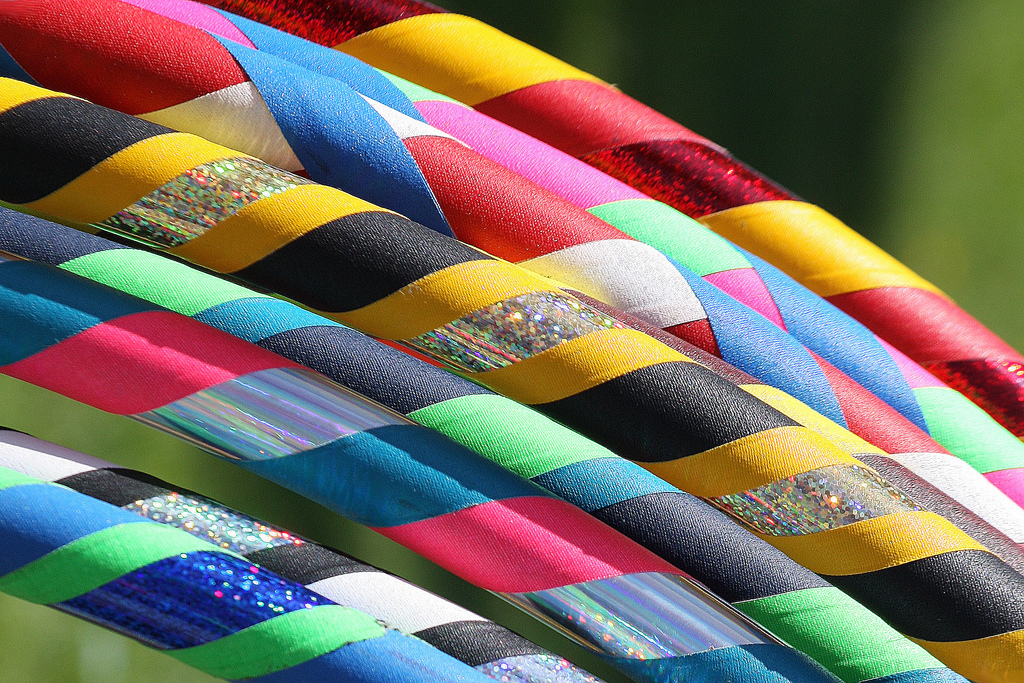
A familiar playground object can become an inexpensive team challenge. Hula hoops are easy to transport and work with a wide range of group sizes. The best activities are not simply competitions; they give participants a reason to communicate, try an approach, learn from a mistake, and improve together.
1. Pass the Hoop
Form a circle and ask everyone to hold hands. Place a hoop over the joined hands of two neighbors. The group works to move it all the way around the circle without breaking the chain. Try a second round and ask the team what they changed.
2. Hoop Islands
Spread a few hoops around a safe, open area. Teams move from one marked island to another while following a simple rule, such as keeping the whole group together. Reduce the number of available islands to encourage planning and cooperation.
3. The Silent Relay
Divide participants into small groups. Each group must pass a hoop along a line without speaking. When everyone finishes, discuss the hand signals, eye contact and other forms of communication that helped.
4. Circle Shapes
Give participants several hoops and ask them to create a pattern or shape that everyone can agree on. Add a time limit only after they have practiced. The exercise highlights the difference between rushing and organizing.
5. Guide the Hoop
One participant gives directions while another maneuvers a hoop along a short course. Keep the activity accessible, allow everyone to opt out of restricted-vision variations, and agree on clear safety boundaries.
6. Hoop Target Challenge
Set several safe targets on the ground. The team decides how to assign turns, adjust distance and improve accuracy. Instead of rewarding the highest individual score, record the team’s combined improvement.
7. Human Hoop Maze
Lay hoops down in a winding pattern and ask the group to develop a route everyone can follow. Introduce a simple constraint, such as changing the leader halfway through, so the group can practice adaptability.
Debrief the Team
After each game, ask: What was our first idea? Who helped us change direction? Where did communication improve? Connect those observations to a real team challenge, then invite participants to name one practice they will use later.